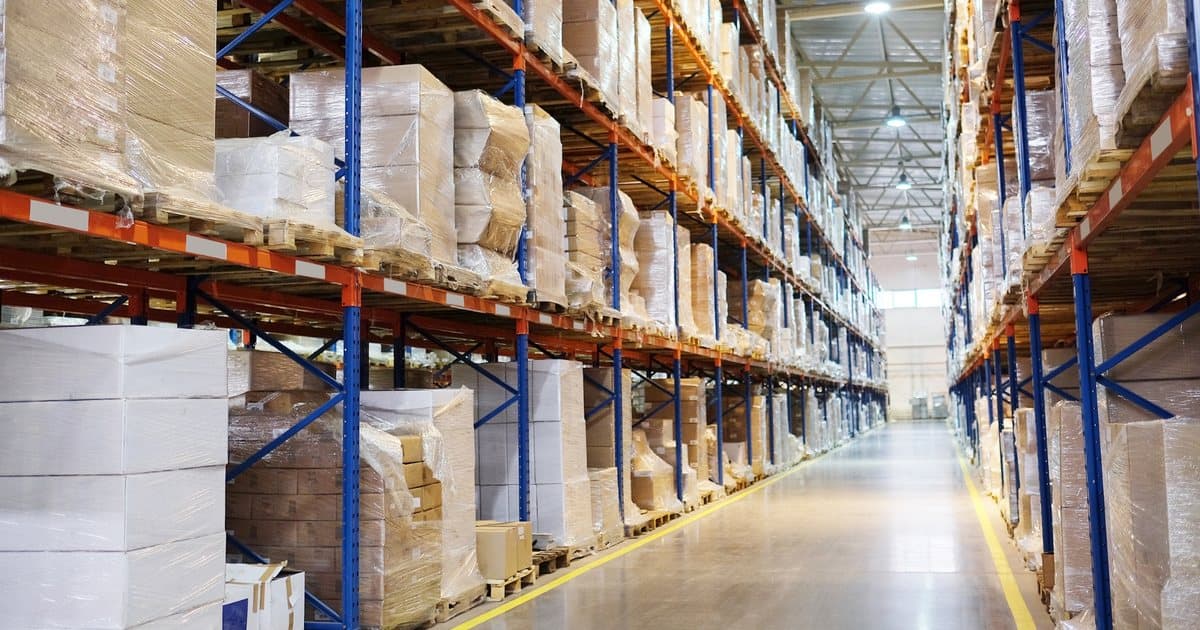
A 3PL, or third-party logistics provider, is a business that stores and ships goods on behalf of other businesses. For an online retailer, that usually means the 3PL holds your stock in its warehouse, picks, packs and sends your orders as they come in, and deals with your returns. You may also see the terms fulfilment house, fulfilment centre or fulfilment provider, which mean much the same thing.
How outsourced fulfilment works
It starts with goods in. Your stock arrives at the 3PL's warehouse, where it is counted, checked against your paperwork and put away in recorded locations. From then on the warehouse system knows where every item is, and you can see your stock levels in the provider's online portal.
When a customer places an order, it passes from your online store to the warehouse automatically through an integration with your sales platform. The order is picked from the shelf, checked, packed and labelled, then handed to the carrier. The tracking number goes back to your store so your customer is kept informed.
Returns come back to the warehouse rather than to you. Each one is checked, and resellable items go back into stock while damaged items are set aside for you to decide what happens to them. Throughout, you can see what has been received, sent and returned.
3PL or in-house fulfilment?
Running your own fulfilment gives you direct control, but the costs are largely fixed. You pay for the space, staff, equipment, packaging and carrier accounts whether you send ten orders a day or a thousand, and the time spent packing parcels is time not spent on the rest of the business.
With a 3PL, most costs move with your volumes, space expands and contracts with the seasons, and you benefit from the provider's systems and carrier arrangements. The trade-off is that you rely on someone else's accuracy and communication, so choosing the right provider matters.
1PL, 2PL, 3PL and 4PL
The numbers describe how much of the logistics is handed over. A 1PL is a business that handles its own logistics. A 2PL is a transport provider, such as a carrier or haulier, that moves goods but does not store or process them. A 3PL stores goods, fulfils orders and manages the shipping on your behalf. A 4PL manages the whole supply chain, often coordinating several other providers.
What a 3PL needs from you
To get started, a 3PL needs your product data, including SKUs, barcodes, and sizes and weights where possible, plus access to connect your sales channels. Stock should arrive with a packing list so it can be checked in quickly. You will also agree the delivery services you offer your customers, how returns should be handled, and any packaging or presentation requirements.
TDW Logistics
TDW Logistics is a 3PL based in the Forest of Dean, Gloucestershire. We store stock, fulfil online and wholesale orders, handle returns and prepare stock for retail, with no setup fee and no minimum order or storage volume. We are also an HMRC Approved Fulfilment Centre under the Fulfilment House Due Diligence Scheme (FHDDS) for brands based outside the UK. Read how much ecommerce fulfilment costs, or get in touch for a quote.